HomeProvinces › Almería
V.T. Laujar Alpujarra

Wine tourism in Almería

Discover all the experiences, the best spots and the widest wine tourism offer in Almería on Visitar Bodegas. Find out more!

14wineries in the area
5appellations
1already bookable
01
// Trip tips

5 tips for your getaway to Almería.

  1. 1

    Book in advance

    Especially at weekends and during the harvest, spots fly. Secure your visit by booking online.

  2. 2

    Choose the right season

    Spring and autumn show off the vineyard; the harvest, around September, is the most special, with tastings and activities among the vines.

  3. 3

    Check each listing

    Check opening hours, languages and whether the visit includes a tasting before setting off.

  4. 4

    Make a full plan

    Combine the winery with the food and the villages of Almería to round off the day.

  5. 5

    Drink in moderation

    If you drive after the tasting, do so in moderation or designate a driver.

02
// Wineries · book your visit

Wineries to visit in Almería.

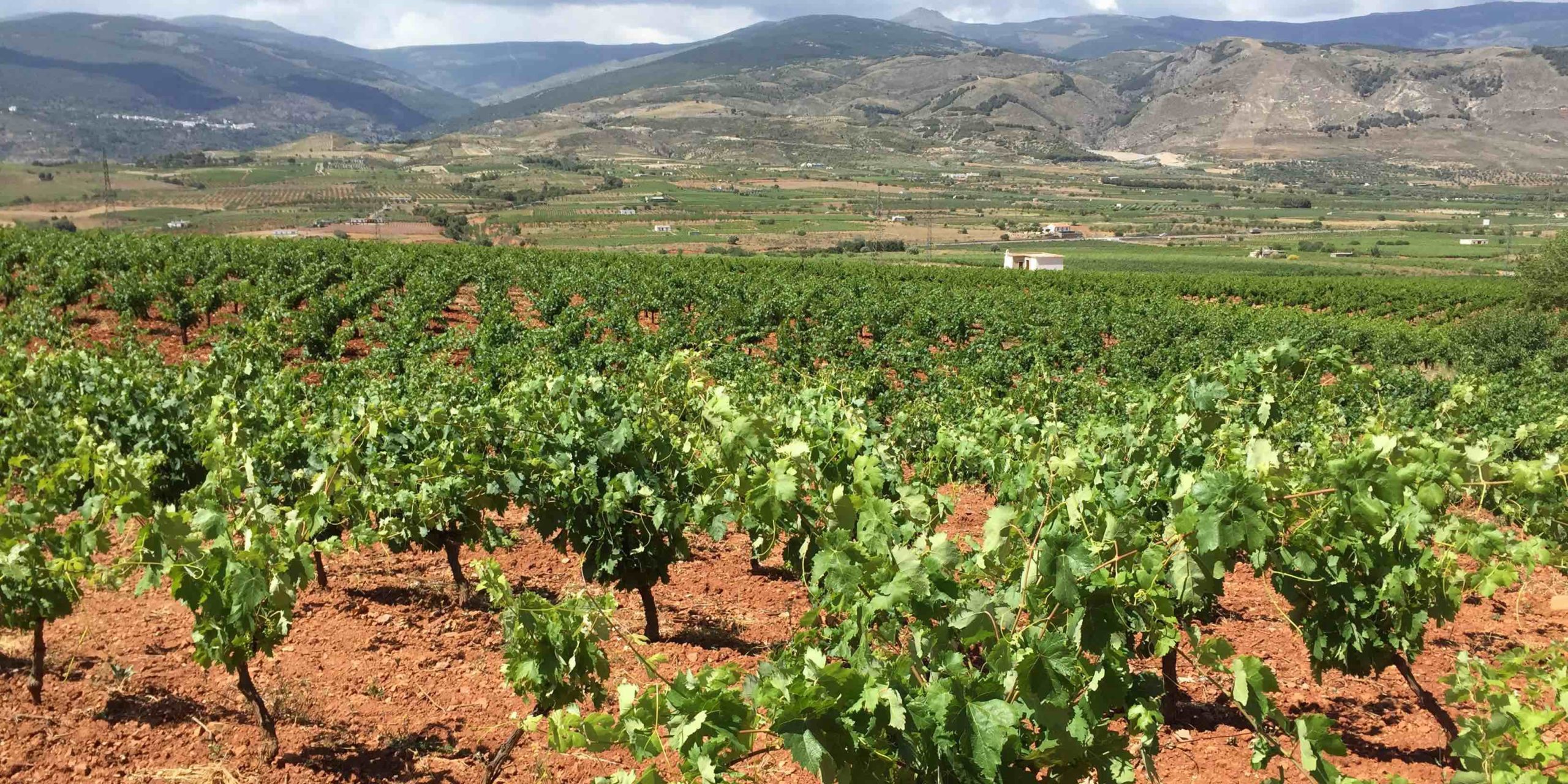
We are not talking about geography, but about wine. This wine falls within the so-called Vinos de la Tierra — a quality-protection level between ordinary table wines and the exclusive ones with an Appellation of Origin. Its production covers a large wine-growing area of the Almería desert and it is made with garnacha tinta, monastrell, syrah, cabernet sauvignon and merlot for the reds, and chardonnay, moscatel, macabeo and sauvignon blanc for the whites. What makes these wines so special is the altitude at which the grapes are grown in the middle of the desert, around 525 metres above sea level, and the climatic contrast of very warm days and very cool nights.

This geographical indication, also part of the Vinos de la Tierra, distinguishes the table wines of the Laujar valley wine area, covering the municipalities of Alcolea, Fondón and Laujar de Andarax, in the easternmost Alpujarra of Sierra Nevada, whose vines are grown from 800 to 1,500 metres in altitude. In this region the sector is booming, covering more than 800 hectares and promoting sparkling wine varieties in addition to the traditional whites, reds and rosés.
03
// Appellations of origin

The wine of Almería, by its origin.

V.T. Laujar Alpujarra

4 wineries

4 wineries in Almería.

See the V.T. Laujar Alpujarra →

V.T. Ribera Del Andarax

4 wineries

4 wineries in Almería.

See the V.T. Ribera Del Andarax →

V.T. Sierras De Las Estancias Y Los Filabres

3 wineries

3 wineries in Almería.

See the V.T. Sierras De Las Estancias Y Los Filabres →

V.T. Desierto De Almeria

2 wineries

2 wineries in Almería.

See the V.T. Desierto De Almeria →

V.T. Norte De Almeria

1 bodega

1 wineries in Almería.

See the V.T. Norte De Almeria →
04
// Accommodation

Where to sleep in Almería.

Almería's wine lives in the mountains, in the Alpujarra and the Andarax valley. Laujar de Andarax, capital of the Almerian Alpujarra, and white villages such as Ohanes or Padules gather stone country houses and charming lodgings among the vines, ideal for tasting the high-altitude wines of the sierra.

Those seeking contrast can alternate with the Cabo de Gata coast, where San José or Las Negras offer lodging facing the sea. From the capital, Almería, the routes towards the Andarax and the Filabres are close by for a getaway of wine and desert.

Discover all the accommodation in AlmeríaComing soon
05
// Food

Where to eat in Almería.

Almería brings sea and sierra to the plate: prawns from Garrucha, fried fish and cool ajoblanco alongside the migas and choto al ajillo (garlic kid) of the Alpujarra. The free tapas with your beer are a tradition, and the ham of Serón pairs wonderfully with the high-altitude reds of the Andarax.

From the market garden of El Ejido come raf tomatoes and vegetables; from the interior, gurullos with rabbit and gachas. For dessert, the almond soplillos of the Alpujarra and the roscos de vino, which call for a glass of mistela or a Laujar red.

Discover where to eat in AlmeríaComing soon
06
// Activities

What to do in Almería.

The Cabo de Gata-Níjar Natural Park, with its volcanic coves and the Sirenas reef, is the great draw. Inland, the Tabernas Desert, Europe's only semi-arid landscape, holds the western-film sets and a light like no other for the northern vines.

The Almerian Alpujarra offers trails along the Andarax river and the Sierra de Gádor, with springs and chestnut groves. In the capital, the Alcazaba and the Civil War shelter await, while the Filabres and Sierra Nevada complete the mountains.

Discover activities in AlmeríaComing soon
07
// Culture

Museums of Almería.

The Alcazaba of Almería, one of the largest Muslim fortresses in Spain, dominates the city alongside the fortress cathedral designed against Berber raids. The archaeological sites of Los Millares and El Argar place the province at the origin of European metallurgy.

The Moorish imprint beats in the Alpujarra, in its irrigation channels, jarapa looms and its speech. The Tabernas Desert, the set of dozens of films, and the museums of cinema and water give a singular culture to this land of extreme sun.

Discover the museums of AlmeríaComing soon
08
// Campsites

Where to camp in Almería.

Cabo de Gata-Níjar concentrates campsites and motorhome areas near San José, Las Negras and the beaches of Los Genoveses and Mónsul, a protected coast of transparent waters. It is the natural destination for sleeping by the sea under the clearest skies, ideal for stargazing.

Inland, the Sierra de Gádor and the Alpujarra of the Andarax offer cool spots among vines and chestnut trees for summer camping. Travelling by motorhome through the Tabernas Desert and the Filabres offers lunar landscapes a short distance from the high-altitude wineries.

Discover all the campsites in AlmeríaComing soon
09
// Useful info

Climate and travel tips for Almería.

On the Costa de Almería the climate can be considered Mediterranean, with mild, relatively rainy winters and hot, sunny summers, although the aridity is particularly pronounced — so much so that the landscape is desert-like. Several beaches lie in a rocky, arid setting. We are on the part of Spain’s southern coast belonging to the province of Almería, in south-eastern Andalusia. Geographically, the Costa de Almería is divided into the Poniente Almeriense (with towns such as Adra, El Ejido, Berja, Roquetas de Mar, Almerimar, Enix and the Punta Entinas-Sabinar nature reserve), the central part (home to the Bay of Almería with the capital, as well as Cabo de Gata-Níjar), and the Levante Almeriense (with towns such as Carboneras, Mojácar, Garrucha, Vera, Pulpí, Cuevas del Almanzora and Villaricos). In the Levante, a short distance from Carboneras, lies the small island of San Andrés. The Cabo de Gata-Níjar natural park is in the central part. Inland, northwest of Almería, we find the Tabernas Desert.

10
// FAQ

Questions about wine tourism in Almería.

How many wineries can you visit in Almería?
In Almería there are 14 wineries listed on Visitar Bodegas, 1 of which can already be booked online.
What is the best season for wine tourism in Almería?
Spring and autumn offer the best weather and vineyard colour, and the harvest (around September) is the most special time. Book in advance, especially at weekends.
Which appellations of origin are there in Almería?
In Almería, V.T. Laujar Alpujarra, V.T. Ribera Del Andarax, V.T. Sierras De Las Estancias Y Los Filabres stand out.

Your wine getaway in Almería awaits.

Choose your winery, book your visit and experience wine where it is born.

View wineries →