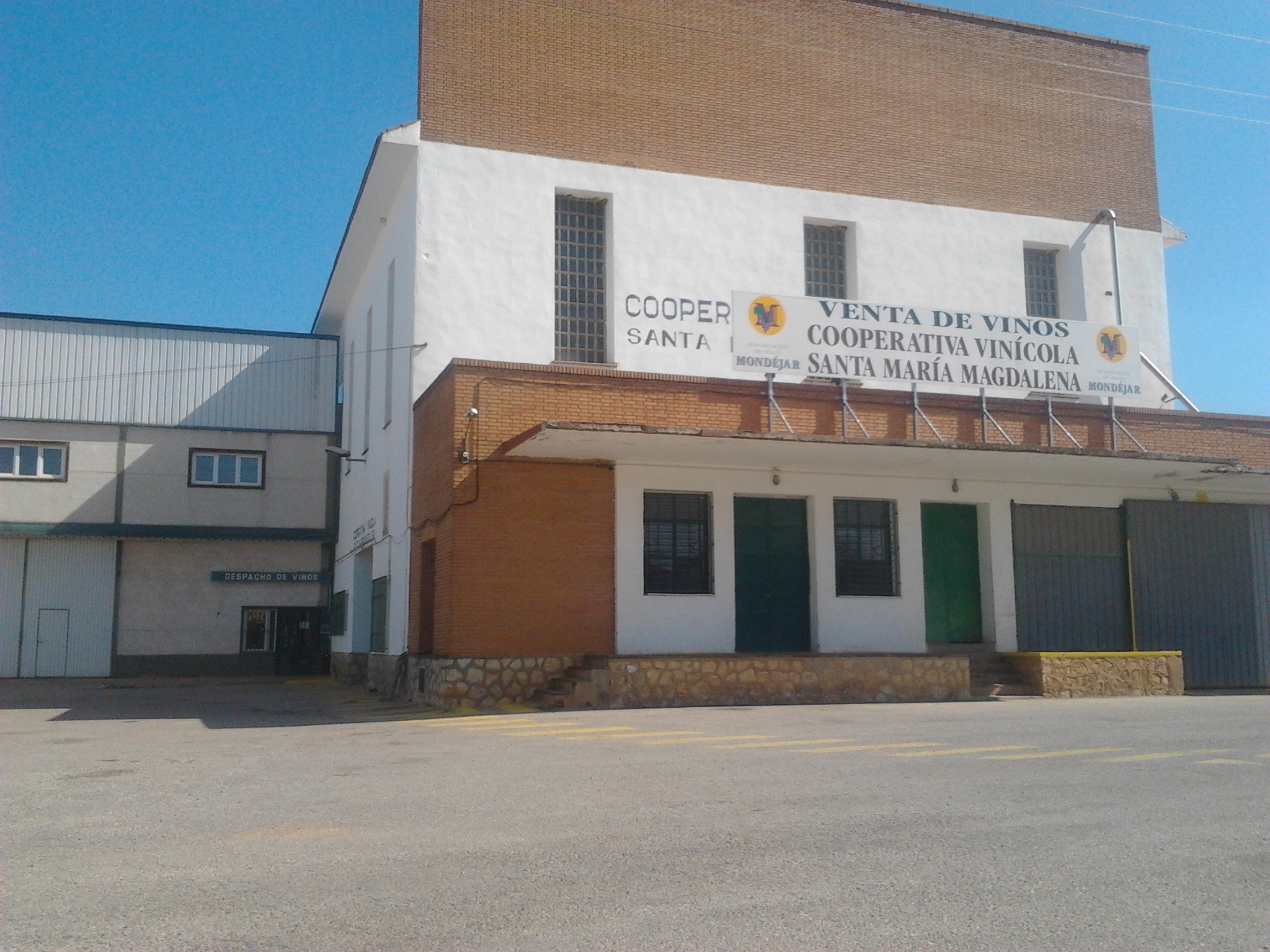
A unique area for unique wines
In the 16th century the historical references spoke of the wine of Mondéjar, describing it as good and delicate, with special reference to the rosé. The alternation of its red clay soils with the grey ones of marly limestone, together with a mild Mediterranean climate, give rise to red wines of intense ruby colour, and to whites of pale gold colour, fruity and of elegant appearance. From a blend of the Cencibel and Malvar varieties its reds are obtained, and from the Malvar with the Airén the whites.
The land and the climate
With an area of 93,962 ha, the Mondéjar Designation of Origin comprises the municipalities of Pastrana, Pioz, Pozo de Almoguera, Sacedon, Sayaton, Valdeconcha, Yebra, Zorita de Canes, Guadalajara de Zorita, Albares, Almoguera, Almohacid de Zorita, Driebes, Escariche, Escopete, Fuentenovilla, Illana, Loranca de Tajuña, Mazuecos and Mondéjar.
Zones
In general terms, it is a transition zone between the southern edge of the Alcarria and the northern limit of the plateau of the Mesa de Ocaña, to the South. The perimeter considered belongs to the Tagus basin, this and the Taguña being the most important watercourses that run in a NE-SW direction. The region thus has a tubular morphology and rivers hemmed in on one hand, and extensive ramps and plains on the other, with an average altitude of 800 m.
Microclimates
In a year considered climatologically as average, the number of rainy days is 108.6, with rainfall of 501.28 mm.
Regarding the frosts, in a normal year, the danger of frost extends from mid-November until the beginning of April. In an extreme year the frosts may begin from the month of October, extending until the beginning of May.
Due to the characteristic climatology of the area, the budding of the vine leaves begins in mid-March, with their fall occurring in the first fortnight of November.
Tempranillo: This variety is the main one of our Designation of Origin. Its production is moderate but of a very high quality. An early-ripening variety, it produces a bunch of medium size, compact and regular, whose grapes have a medium-thick skin and soft pulp, of colourless juice. Its varietal aromas recall prunes, liquorice and forest fruits.
Cabernet Sauvignon: It is a French variety. It is very select and with full adaptation to our climatology. Its production, although it does not present high yields, is characterised by its intense and stable colour. Its bunches are conical and almost pointed, with a wide base that progressively narrows towards the end. The grapes are of medium to small size, with a thick skin. Its powerful tannins and lively acidity provide hard wines in their youth. It is much used in the coupage with other red varieties. Its wines, of beautiful raspberry-ruby tones, possess floral aromas with great richness in nuances.
Syrah: It is a variety originating from the Rhône valley that offers excellent results in areas of much sun and high temperatures, which has made it adapt perfectly to our soils. Its bunch is cylindrical, of medium size, with bluish-coloured grapes, the skin is moderately thick and the pulp juicy. Its wines are very dark, with a strong body and great ageing potential. Its aromas recall violets.
Garnacha: It is the most used variety in the production of rosé wines. It is a productive and resistant variety, capable of withstanding the most adverse environmental conditions. Its bunch is of medium size and compact, of black colour and spheroid shape, with grapes of thin skin and juicy pulp. It gives rise to a wine of brilliant strawberry-red colour with ruby nuances of great cleanliness and liveliness. Its varietal aromas recall wild fruits.