Less than an hour from Barcelona, Penedès is the birthplace of cava and one of the easiest wine getaways in Spain: you can go by train, tour the great cava houses, eat wonderfully and be back in the city for dinner. This is the complete guide to the route.
Sant Sadurní d'Anoia accounts for around 75% of all cava production. This is home to the great houses —Codorníu, with its spectacular Art Nouveau estate designed by Josep Puig i Cadafalch and listed as a Historic-Artistic Monument, and Freixenet— along with dozens of family-run cava houses. Descending into their miles of underground galleries, where millions of bottles rest in the dark at a constant temperature, is the essence of the visit.
The town, home to little more than 12,000 people, lives by and for cava: beneath its streets stretch over a hundred kilometres of cellars carved into the rock, and every September it celebrates the Fira del Cava, with tastings, music and the local "cavatast" tradition. Many wineries are just a few minutes' walk from the train station, so you can string together two visits in a single morning without needing a car.
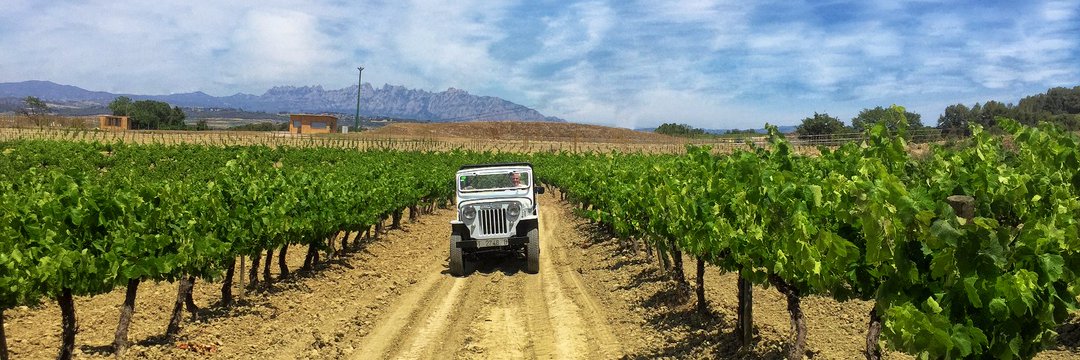
Penedès isn't only about cava: it's also one of Catalonia's great still-wine regions. Vilafranca del Penedès, the district capital, is home to VINSEUM (the Museum of Wine Cultures of Catalonia) and is famous for its castells (human towers). Around it you'll find xarel·lo whites, reds and also Corpinnat, the label for organic, long-aged sparkling wines.
Cava is made using the traditional method: the second fermentation takes place inside the bottle itself, which rests on its lees for a minimum of nine months (longer for reserva and gran reserva). On the visit you'll see the native grape varieties —macabeo, xarel·lo and parellada—, the riddling and disgorgement, and you'll taste several cavas, from brut nature to reserva.
You'll learn to tell cavas apart by their aging —de Guarda (at least 9 months), Reserva (over 15) and Gran Reserva (over 30)— and by their sweetness, from the dry brut nature to the sweet, with the popular brut in between. There is also Cava de Paraje Calificado, the top category, from a single vineyard and with long aging.
On the visit you'll see the riddling up close (once done by hand on pupitres, now also with gyropalettes) and the disgorgement, the moment the sediment is expelled and the bottle receives its dosage. That's what sets an ordinary sparkling wine apart from a cava with years of aging on its lees, which is where those aromas of toasted bread, almond and pastry that you'll recognise in the tasting come from.

Penedès's big advantage is how well connected it is: the R4 Rodalies commuter line links Barcelona-Sants with Sant Sadurní d'Anoia in about 50 minutes, and many cava houses are within walking distance of the station, so you can taste without driving. By car, along the AP-7, it's about 40 minutes from Barcelona and a little less from Tarragona.
Penedès goes far beyond the classic tasting. These are the experiences that make the getaway worth it:

Choose the winery, the experience and the date, and book your tasting or guided tour in Penedès online. Instant confirmation and secure payment.
The grape harvest (late August to October) is the liveliest time, and Christmas is cava's high season, when many cava houses schedule special visits. Spring offers the best weather for walking among the vineyards. Book your visits in advance, especially at Christmas and during the harvest.
An ideal plan starts on Saturday with a big cava house in the morning and a family-run cava house in the afternoon, with a paired meal in between. In the evening, dinner and rest at a masia among the vineyards. On Sunday, spend the morning in Vilafranca del Penedès and its VINSEUM museum, and if you have time, stop by Sitges or the monastery of Montserrat before heading back.
Cava was born in the late 19th century, when several Penedès producers, recovering from phylloxera, decided to make sparkling wine using the traditional method. Josep Raventós produced the first bottles in Sant Sadurní d'Anoia in the 1870s, and from there the region became the world capital of this wine. Discover and book the wineries of D.O. Cava by province and experience.
Choose your cava house, book your tasting or guided tour and toast where the bubbles are born, less than an hour from Barcelona.
See cellars to visit →