Discover all the experiences, the best spots and the widest wine tourism offer in Álava on Visitar Bodegas. Find out more!
Especially at weekends and during the harvest, spots fly. Secure your visit by booking online.
Spring and autumn show off the vineyard; the harvest, around September, is the most special, with tastings and activities among the vines.
Check opening hours, languages and whether the visit includes a tasting before setting off.
Combine the winery with the food and the villages of Álava to round off the day.
If you drive after the tasting, do so in moderation or designate a driver.
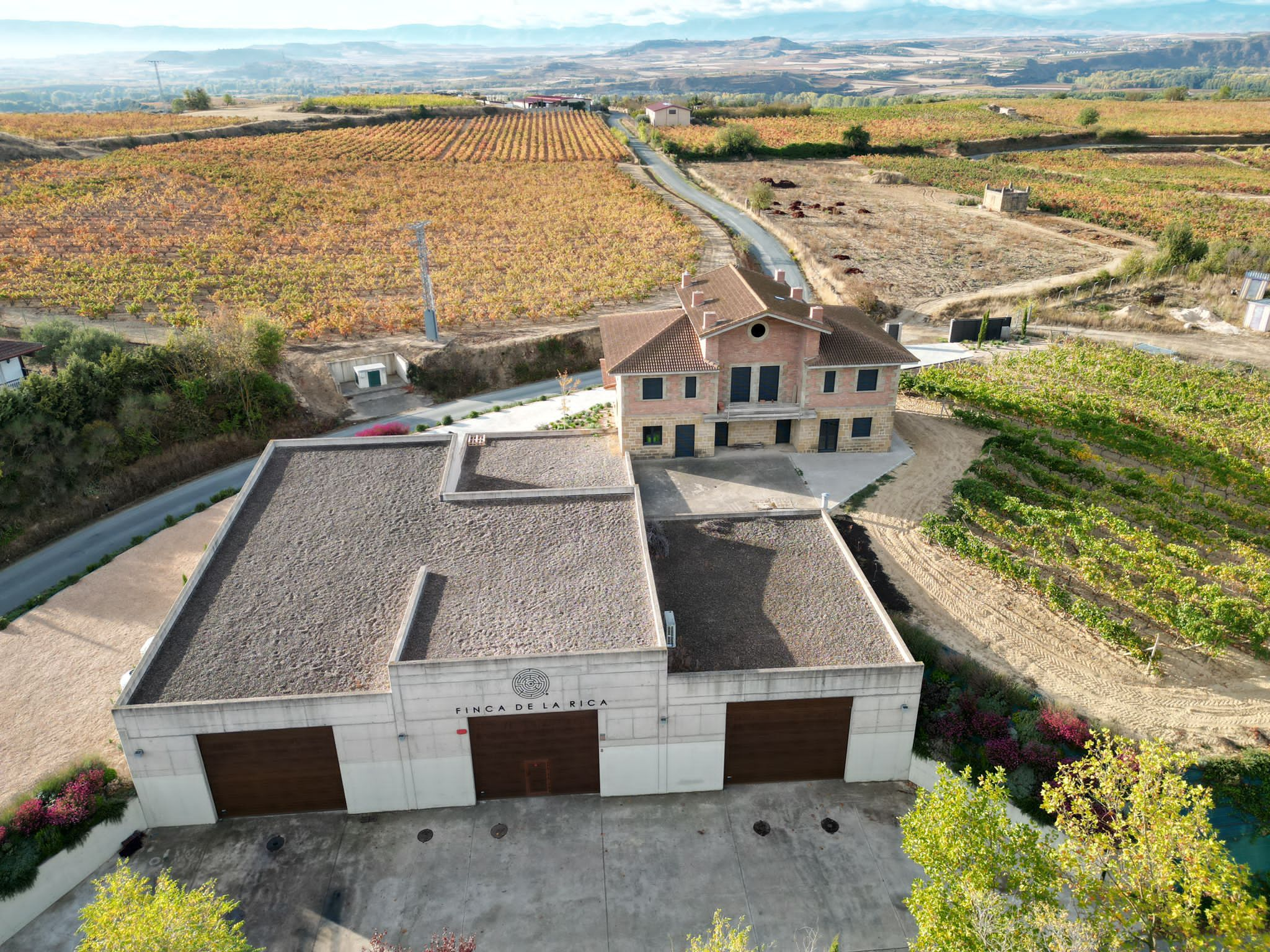
Rioja Alavesa is the DOCa area that spreads over just over 300 square kilometres in the south of the province of Álava, on the north bank of the Ebro river, on predominantly clay-limestone soils on terraces and small plots, with an Atlantic, dry and sunny climate.
It is made up of 18 municipalities that give it unrivalled beauty through all kinds of wine-tourism resources which, present in the natural environment and bringing great tourist and economic value to the area, merge with an innovative, admired architecture prominent in many historic buildings and wineries that, over time, have made a name for themselves in history and amazed anyone who looks up and observes the majesty and splendour of a land naturally suited both to making young wines and to ageing them in barrel, giving them their own unique, characteristic aromas that perfectly represent the values of Rioja Alavesa.
Examples of this are the picturesque streets of Elciego or the old wineries of Laguardia, two municipalities that year after year attract countless tourists from all over the world, who do not hesitate to repeat the experience and immerse themselves in the important contributions and technical, winemaking advances their people are making.
La denominación más prestigiosa de España, célebre por sus crianzas y reservas en barrica de roble. Uvas: tempranillo, garnacha, graciano y viura.
See the D.O.Ca Rioja →Tintos potentes y longevos de la meseta castellana, en la Milla de Oro. Uvas: tinto fino (tempranillo).
See the D.O. Ribera Del Duero →Blancos frescos, aromáticos y muy gastronómicos. Uvas: verdejo y sauvignon blanc.
See the D.O. Rueda →For a getaway through the Rioja Alavesa it is best to make your base in Laguardia, with its noble houses and wineries carved out beneath the medieval old town, or in neighbouring villages such as Elciego, Samaniego or Labastida. Stone country houses and charming hotels abound among the vineyards, with the Sierra de Cantabria as a backdrop.
Those who prefer a city can stay in Vitoria-Gasteiz and head out to the vines for the day. Around Rivabellosa and the Añana district there are also quiet places to stay, a good option for combining wine with the Salinas de Añana salt flats or the Romanesque heritage of Álava.
Álava's cuisine pairs wonderfully with Rioja: patatas a la riojana (potatoes with chorizo), lamb chops grilled over vine cuttings, Álava pochas (fresh white beans) and the vegetables of the Llanada plain. In Vitoria the pintxos reign supreme, and throughout the province smoked Idiazábal cheese accompanies an aged red.
From the market garden come the pinto beans and peppers; from the Rioja Alavesa, snails and salt cod. To finish, cuajada (junket) and pastel vasco (Basque cake). Each dish calls for a different glass, from the region's fresh txakoli to a full-bodied tempranillo.
Beyond wine tasting, Álava invites you to stroll through the walled old town of Laguardia, visit the Salinas de Añana with its thousand-year-old salt pans and explore the dolmens of the Rioja Alavesa. The Sierra de Cantabria offers trails with views over the sea of vineyards and the stone villages.
In Vitoria-Gasteiz, the Green Belt, the Cathedral of Santa María and the medieval old town all deserve time. To the north, the Valderejo Natural Park and the gorges of the Nervión round out nature plans a short distance from the wineries.
Álava preserves a heritage that has dialogued with wine since the Middle Ages: the underground cellars of Laguardia, the fortress churches and the polychrome portico of Santa María de los Reyes. The Roman Villa of Cabriana and the prehistoric settlements speak of a land inhabited since ancient times.
In Vitoria-Gasteiz, the Museum of Fine Arts, the BIBAT and the old cathedral under open restoration stand out. The tradition of the cuadrillas, the festivities of La Blanca and the culture of txakoli and Rioja Alavesa give each corner its own identity.
The outdoors in Álava revolves around the Sierra de Cantabria and the Ullíbarri-Gamboa reservoir, with bathing areas, trails and motorhome zones near Vitoria. Nature lovers find camping and campsites beside the green landscapes of the Llanada and the Montes de Vitoria.
To the west, the Valderejo Natural Park and the surroundings of the Nervión Waterfall offer hiking among beech woods and cliffs. In the Rioja Alavesa, travelling by motorhome between Laguardia and Labastida lets you sleep near the vineyards and rise early for the tastings.
The best time to travel to Álava in Spain is from June to October, when you have pleasant weather and hardly any rainfall. The average high in Álava is 23 °C in August and 12 °C in January.
In Vitoria, summers are hot, winters are very cold and it is partly cloudy all year round. Over the year, the temperature generally varies from 1 °C to 26 °C and rarely drops below -4 °C or rises above 34 °C.
Based on the tourism score, the best time of year to visit Vitoria for warm-weather activities is from late June to early September.
Álava has a Mediterranean climate. Below we present all the information on average temperature and rainfall in Álava, or the periods when it rains or snows most, so you can be well prepared! Our monthly climate-statistics averages are based on the last 10 years of data.
Choose your winery, book your visit and experience wine where it is born.
View wineries →