Wine tourism in D.O. Almansa
The DO Almansa was founded in 1966. At that time there were a considerable number of wineries which, for various reasons, gradually disappeared, leaving the region's viticulture in the hands of a few wineries and cooperatives. In recent years, new vineyards and new wineries have been created which, together with those that have kept the DO alive since its creation, have given a new boost to this area, privileged for the production of high-quality wines.
A unique region for unique wines
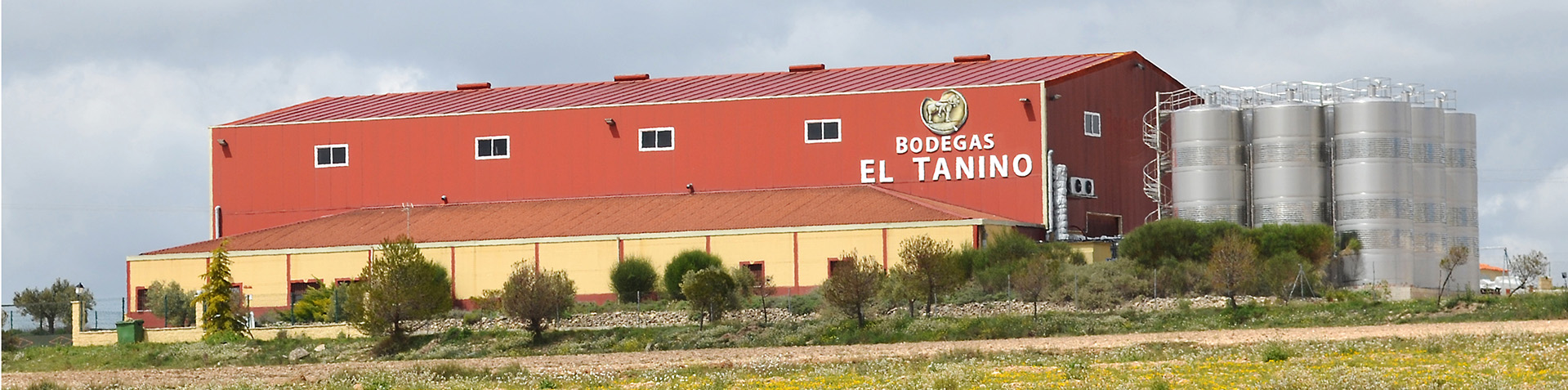
The DO Almansa currently comprises 12 wineries, with an average production of 4 million bottles a year, which have won over consumers in 25 countries.
The potential of this area of Spain for producing very high-quality wines underpins a future of national and international recognition, and the wineries that make up the DO Almansa have committed themselves in that direction.
The main distinction of the territory covered by the D.O. Almansa, compared with that of the Levante, is the difference in altitude, going from 400 metres above sea level in the town of Fuente La Higuera to 700 metres in Almansa.
The wine-producing area of the D.O. Almansa includes the plots and subplots located in eight municipalities, with more than 7,000 hectares of vineyard.
The land and the climate
The Designation of Origin covers some 7,000 hectares of vineyard spread across eight municipalities: Almansa, Alpera, Bonete, Corral Rubio, Chinchilla, Pétrola, Higueruela and Hoya Gonzalo. It is known as the Almansa corridor, marked by the passage between the Levante area and Castile.
Zones
The soil is very rich in limestone and poor in organic matter, alternating areas of thin, stony soil with others that are sandier and deeper.
The altitude of the area ranges between 700 and 1,000 metres above sea level.
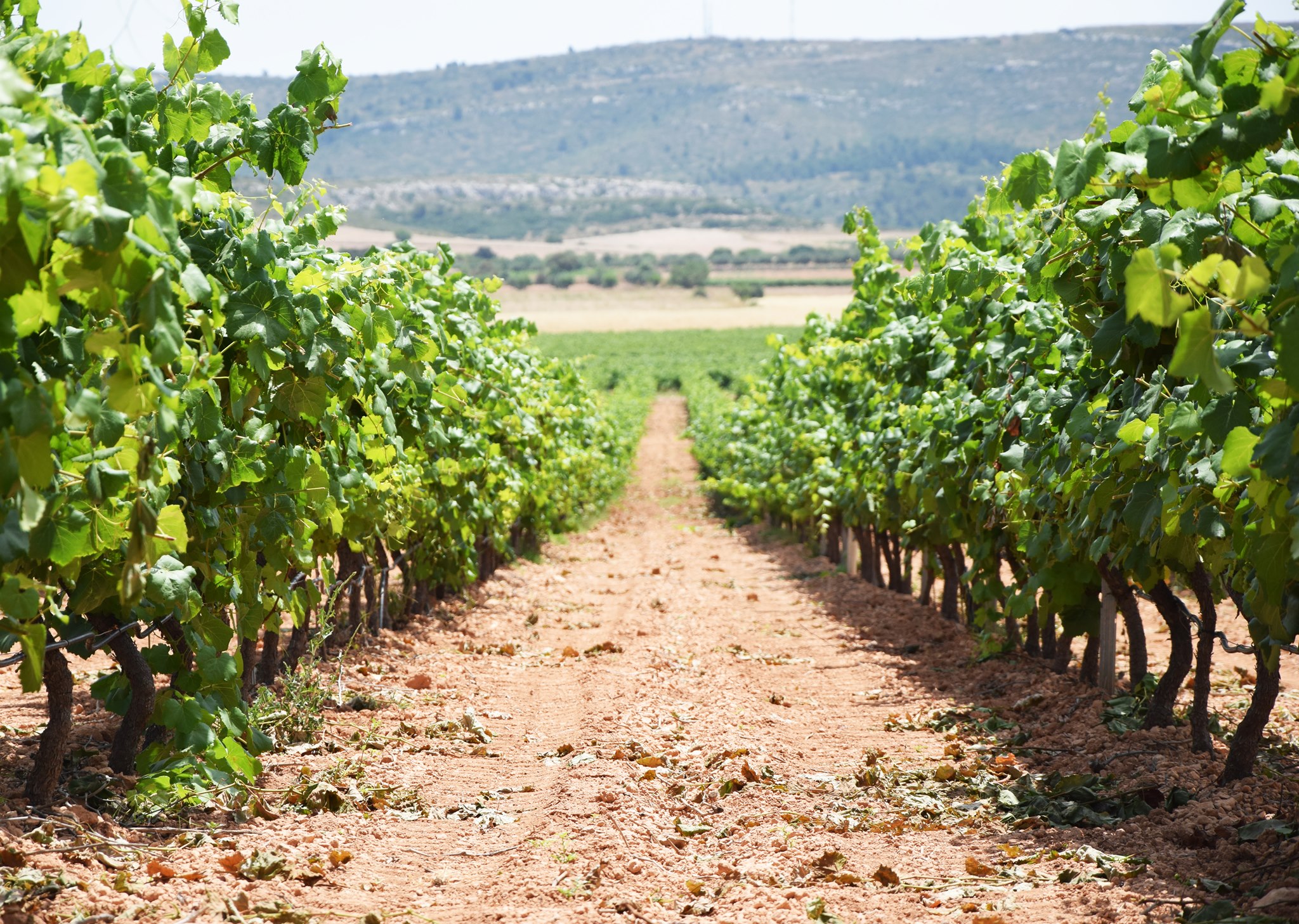
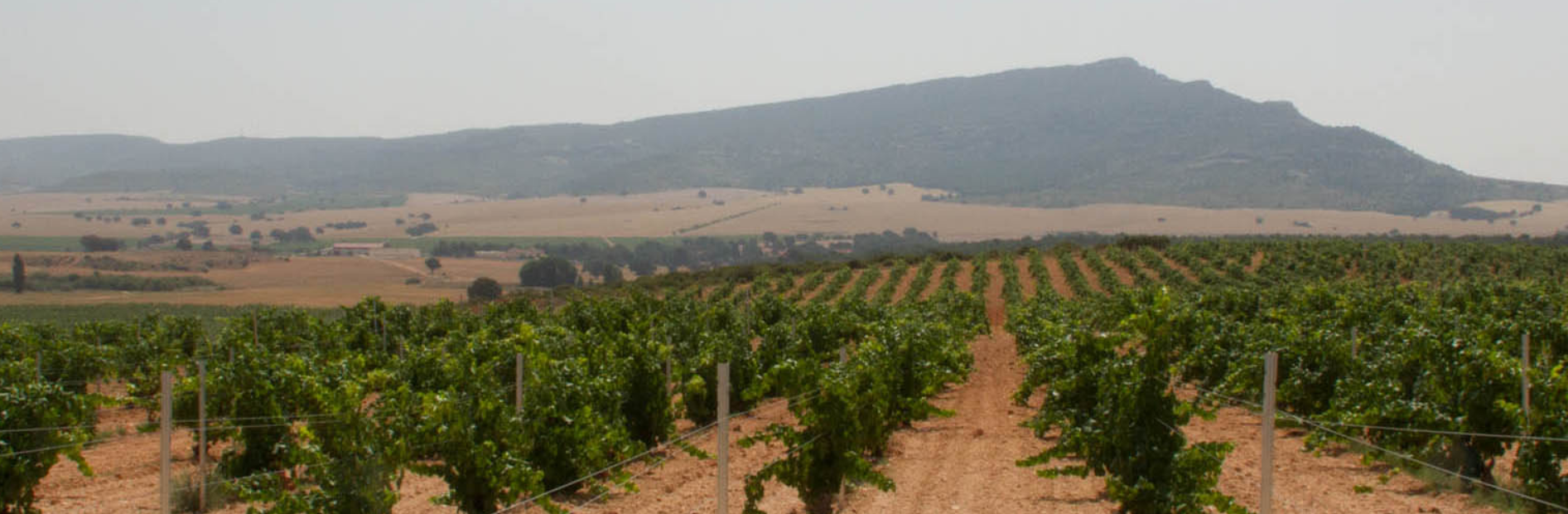
Most of the vineyards lie on flat terrain, although vines can sometimes be seen on the slopes of the nearby hills.
Microclimates
The climate of Almansa is somewhat less extreme than that of La Mancha, but the summers are also very hot, with temperatures that easily reach 40º C.
The climate is continental and the soils are of low fertility, with average rainfall below 350 mm a year. The scarce rainfall, the permeability of the soils and the low yield make it possible to obtain wines with very high aroma and colour intensity.
The wines of the D.O. Almansa are classified into the following categories according to their colour and ageing time:
- Young white and rosé wine
- Barrel-fermented white wine and white crianza
- Young red wine and oak red
- Red crianza wine
- Red reserva and gran reserva wine
- Sparkling wine (coming soon)
The traditional terms that may be used on the wines protected by the Almansa protected designation of origin are: Crianza, Reserva, Gran Reserva, Añejo, Noble, Superior, Viejo and Rancio.
GRAPE VARIETIES
The wines of the Almansa Designation of Origin can be made with native, national and international grapes.
The red grapes most used in the production of quality wines of the DO Almansa are Garnacha Tintorera, Monastrell, Cabernet Sauvignon, Tempranillo, Syrah, Merlot, Garnacha Tinta, Petit Verdot and Pinot Noir.
The white grapes most used in the production of quality wines of the D.O. Almansa are Chardonnay, Sauvignon Blanc, Verdejo and Moscatel de Grano Menudo.
We are especially proud of the wines made from the most unique and special variety of our area, the native variety Garnacha Tintorera.
Garnacha Tintorera, unlike any other red grape variety, has coloured pulp owing to a high level of polyphenols.
Previously this variety was used to give colour to wines, but in recent years it has been used to make unique, high-quality wines, including single-varietal wines.
Experiences to enjoy in D.O. Almansa
Discover this wine-growing region located in the east of Castile-La Mancha