Discover all the experiences, the best spots and the widest wine tourism offer in Burgos on Visitar Bodegas. Find out more!
Especially at weekends and during the harvest, spots fly. Secure your visit by booking online.
Spring and autumn show off the vineyard; the harvest, around September, is the most special, with tastings and activities among the vines.
Check opening hours, languages and whether the visit includes a tasting before setting off.
Combine the winery with the food and the villages of Burgos to round off the day.
If you drive after the tasting, do so in moderation or designate a driver.
In Burgos we are lucky to enjoy three wines with an Appellation of Origin. The south of Burgos and the banks of two of its most emblematic rivers, the Duero and the Arlanza, have given us wines of real quality — truly good and flavourful. With Ribera del Duero there are no surprises: wines renowned and famous beyond our borders.
The Ribera del Duero Appellation of Origin extends across the provinces of Burgos and Valladolid and, to a lesser extent, Soria and Segovia. Burgos is undoubtedly the one with the largest territory and the greatest number of wineries within the DO.
Besides being in the cradle of a wine that has earned every accolade through hard work, we are in one of the most beautiful areas of Burgos, the Arlanza region. This river has shaped a truly fascinating landscape in which the vineyards increasingly claim their share of attention.
Although the appellation is very young — it has only been running since 2007 — the area’s winemaking tradition dates back to the 10th century. No small feat! Here you find a mix of small wineries with a long family tradition alongside others with large, modern facilities.
Although many people don’t know it, the Rioja Appellation of Origin is also present in our province. It is a truly curious case: there is a small piece of Burgos land surrounded by Rioja territory. It lies right between the Rioja towns of Cihuri and Sajazarra, and currently is home to a wine estate called El Ternero — in fact the only Burgos winery with the Rioja Appellation of Origin. They offer very complete wine-tourism visits.
Tintos potentes y longevos de la meseta castellana, en la Milla de Oro. Uvas: tinto fino (tempranillo).
See the D.O. Ribera Del Duero →La denominación más prestigiosa de España, célebre por sus crianzas y reservas en barrica de roble. Uvas: tempranillo, garnacha, graciano y viura.
See the D.O.Ca Rioja →Espumosos por el método tradicional, con crianza en botella. Uvas: macabeo, xarel·lo y parellada.
See the D.O. Cava →The Burgos stretch of the Ribera del Duero, with Aranda de Duero and villages such as Roa, La Horra and Gumiel de Izán, offers charming hotels, inns and rural houses set among the vineyards for wine tourism at a leisurely pace. Many former underground cellars have been turned into distinctive places to stay.
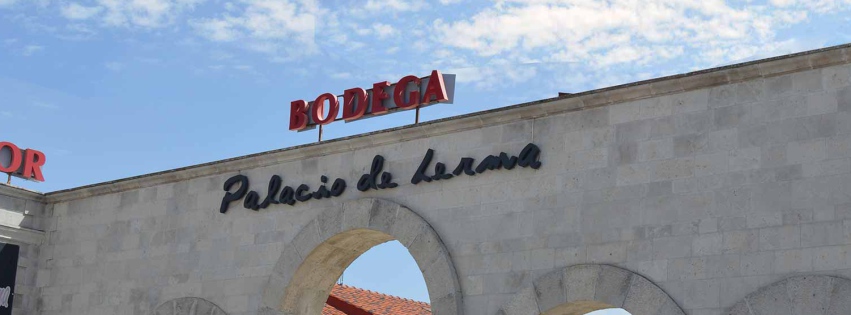
The city of Burgos, with its Gothic cathedral, makes a comfortable base, and the Arlanza region adds medieval gems like Covarrubias and Lerma, the latter with its ducal parador, perfect for sleeping between tastings of Tempranillo.
Here the star is lechazo (milk-fed lamb) roasted in a wood-fired oven, the flagship dish of the Ribera del Duero, which finds its ideal match in the region's young reds and crianzas. The morcilla de Burgos, made with rice, is another essential emblem.
Fresh Burgos cheese, garlic soups and the hearty olla podrida round out a recipe book born of cold country. A good Ribera red or an Arlanza white completes any meal in a traditional grill house.
Amid the vineyards, the province offers Burgos Cathedral, a World Heritage Site, the Museum of Human Evolution and the archaeological sites of Atapuerca. The Monastery of Silos, with its cloister and Gregorian chant, deserves a serene stop.
The Arlanza villages, Covarrubias, Lerma and Santo Domingo de Silos, connect with landscapes such as the juniper woods, the La Yecla gorge and the Sierra de la Demanda, ideal for hiking between tasting days.
Wine has deep roots in the Ribera del Duero, where hundreds of underground cellars carved beneath the old quarters of Aranda, Roa or Gumiel still survive, true stone labyrinths that today fuel wine tourism.
To that heritage is added a first-rate patrimony: the Burgos cathedral, the Charterhouse of Miraflores, the dukedom of Lerma and the Arlanza monasteries, witnesses to centuries of Castilian history among the moors and vines of the Duero.
The Sierra de la Demanda offers mountain campsites among pine and oak woods, perfect for the traveller who alternates nature and wine. The banks of the Duero and the Arlanza also provide green settings to pitch a tent or park the motorhome.
Near Silos and the La Yecla gorge there are cool spots to camp, with service areas in several towns. A wonderful plan for combining hiking trails, medieval villages and tastings in the Ribera del Duero.
Burgos sits at an altitude of over 850 metres on the northern Meseta, and the city has a temperate oceanic-continental climate. Winters are cold and windy, with lows that even drop below zero. Summer is a warm season, but rarely excessively hot due to the city’s altitude. July is the warmest month, with an average high of 27.6 °C and an average low of 11.5 °C. There are 2,183 hours of sunshine a year.
Average lows hover around zero between November and March. There are 88 frost days a year, mainly between November and April; January averages 20 days with an average low below 0 °C (frost days). The coldest month is January, with an average low of -0.8 °C and an average high of 7.0 °C.
Rainfall is not excessive; the average annual rainfall is 550 mm. The wettest months are April and May and October to December. The driest months are July, August, September, February and March.
Burgos averages 81 rainy days a year; April, November and December have the most rainy days, averaging 9, while July and August have only 4 and 3 respectively.
Choose your winery, book your visit and experience wine where it is born.
View wineries →