Wine Tourism in IGP Castelló
The enthusiasm of a small group of winegrowers and the guidance and help of the Regional Ministry of Agriculture (Consellería de Agricultura) made it possible for the Geographical Indication “Vins de la Terra de Castelló” to be created and regulated in 2003. This quality designation refers to wines obtained entirely from grapes produced within the area made up of the land suitable for the production of winemaking grapes located within three winegrowing subzones, called Alto Palancia-Alto Mijares, Sant Mateu and Les Useres-Vilafamés.
Recently, with the adaptation to the standards of the European Community, the designation of the wines of the province of Castellón is Protected Geographical Indication Castelló, IGP Castelló.
A unique area for unique wines
In Castellón, as in practically the entire national territory, the first indications attesting to the existence of the vine and wine date back to the 7th–5th centuries BC. Phoenicians and Greeks brought us the first winemaking knowledge, but it was during the Roman era that the expansion of the vine and wine began in the lands of Castellón, with the vine being cultivated throughout the province.
The wineries integrated into the PGI, their winegrowers and the hectares of cultivation included in this quality designation form the great family of the wines of Castellón. A sector that was everything in the 19th century, that was devastated by phylloxera and that today rises from its ashes to showcase its capacity to deliver products of the highest quality.
Zones
The cultivation of the vine is carried out on soils of loamy texture, brown-calcareous overunconsolidated material in which the topography is not very abrupt, and also, in areasprotected from erosion and where the soil has accumulated through wash, on brownsoils over hard limestone.
Microclimates
The PGI Castelló covers an area whose average annual rainfall hovers around540 l/m2. The highest average annual rainfall is reached in the month of October,with 85 l/m2followed by the month of May with 79 l/m2. The lowest total average rainfall isreached in the months of June with 15 l/m2followed by July and August with 25 l/m2.The highest average annual temperature is reached in the month of August with 34.5ºCfollowed by July with 34.2.The less elevated average maximum temperatures occur in February with 21.3ºC andDecember with 22.3ºC for the coastal areas. In the interior areas, theaverage annual minimum temperatures are lower, reaching around –4ºC in December.February, March and November are months with average minimum temperatures below0ºC.
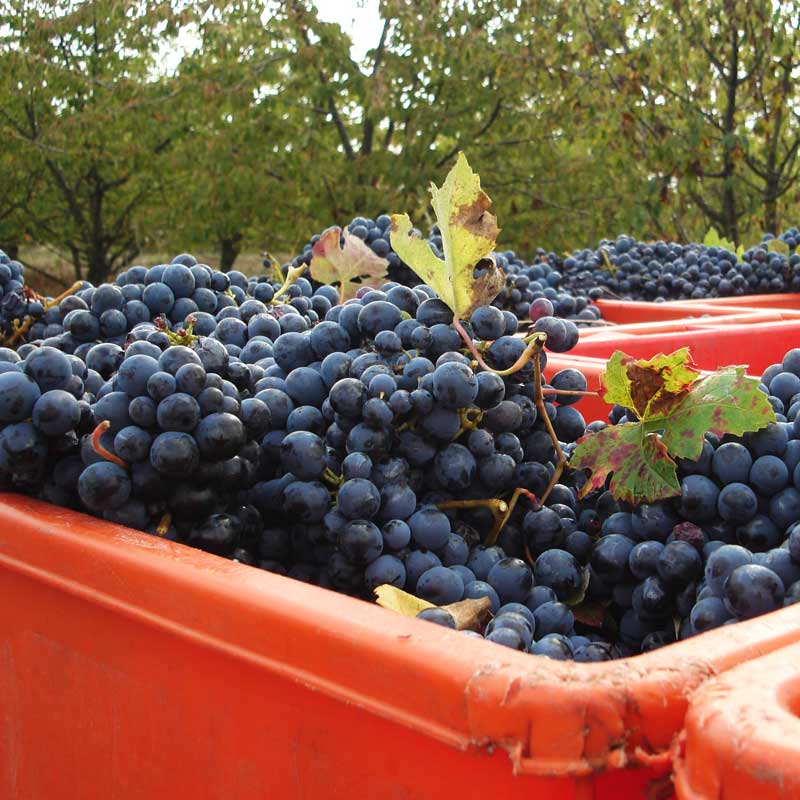
The elaboration of the wines protected by the Protected Geographical Indication will be carried outexclusively with grapes of the following authorised varieties:– Reds: Bobal, Cabernet Sauvignon, Garnacha tinta or Gironet, Garnacha tintorera orTintorera, Merlot, Monastrell, Pinot Noir, Tempranillo or Tinto fino, Bonicaire orEmbolicaire, Syrah, Cabernet Franc, Malbec, Mazuelo, Forcallat tinta, Graciano,Mencía, Petit Verdot.– Whites: Chardonnay, Subirat, Merseguera, Exquitsagos or Verdosilla, Moscatel deAlejandría, Pedro Ximénez, Planta fina de Pedralba or Planta Angort, Viura or Macabeo,Airen or Forcallat blanca, Planta nova or Tardana, Sauvignon blanc, Tortosí, Verdil,Gewurztraminer, Moscatel de grano menudo, Verdejo, Viognier, Riesling, Semillon.