Wine tourism in D.O. La Palma
This Protected Designation of Origin has had its Regulatory Council since 1994. This small island holds a great diversity of microclimates owing to its terrain, which means that within such a small area there are three sub-zones within the designation. Furthermore, its land is so rugged that the vineyards are small and production is limited.
A unique area for unique wines
La Palma is the westernmost island of the Canary Archipelago. With an area of 708 km2 it displays an overwhelming terrain: its lofty peaks, deep ravines, volcanic areas and lush forests fill each of its places with contrast and clarity, which is why it is frequently called «La Isla Bonita» (The Beautiful Island). Its highest point is the Roque de los Muchachos at 2,426 m, although almost the entire central mountain range of the island exceeds 2,000 metres.
Like the rest of the Canary Islands it is of volcanic origin, distinguished from all the others by the greenery of its mountains and the abundance of water, La Palma being the only Canary island with streams or small rivers.
The land and the climate
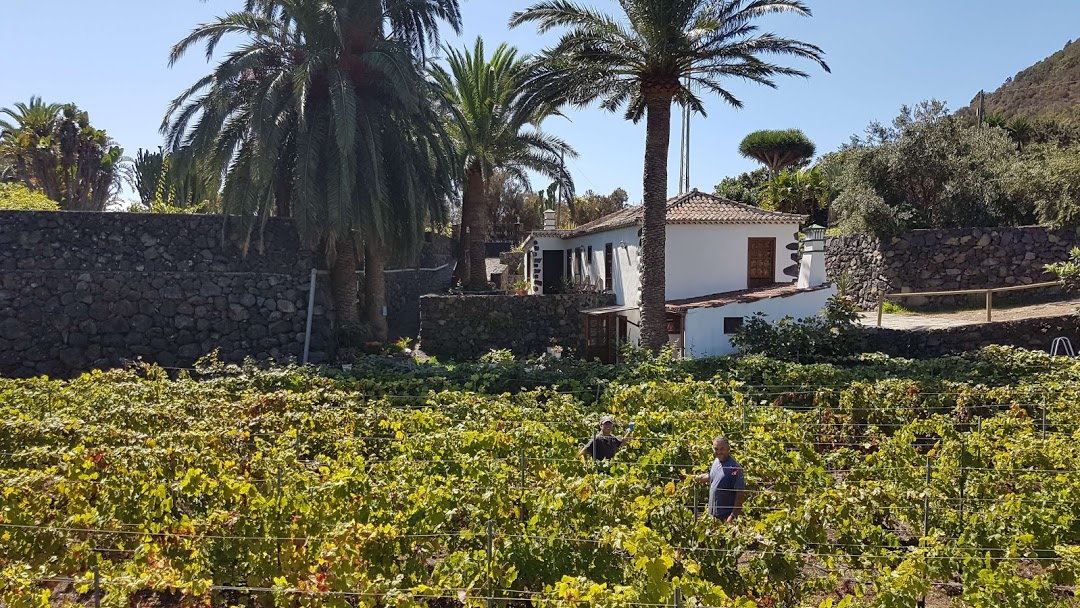
Given the very rugged topography of our island, most of the vineyard occupies plots with very irregular surfaces, characterised by small smallholder plantations of low density and scarce yields, which makes mechanisation extremely difficult.
Zones
The vineyards lie on steeply sloping hillsides, on which terraces of scarce surface have been built through works that are, to say the least, spectacular, of dry stone walls, occupying a strip of variable width that surrounds the island almost continuously, between 200 and 1,400 m in altitude.
Microclimates
An Atlantic climate influenced by the Trade Winds give its wines a great variety.
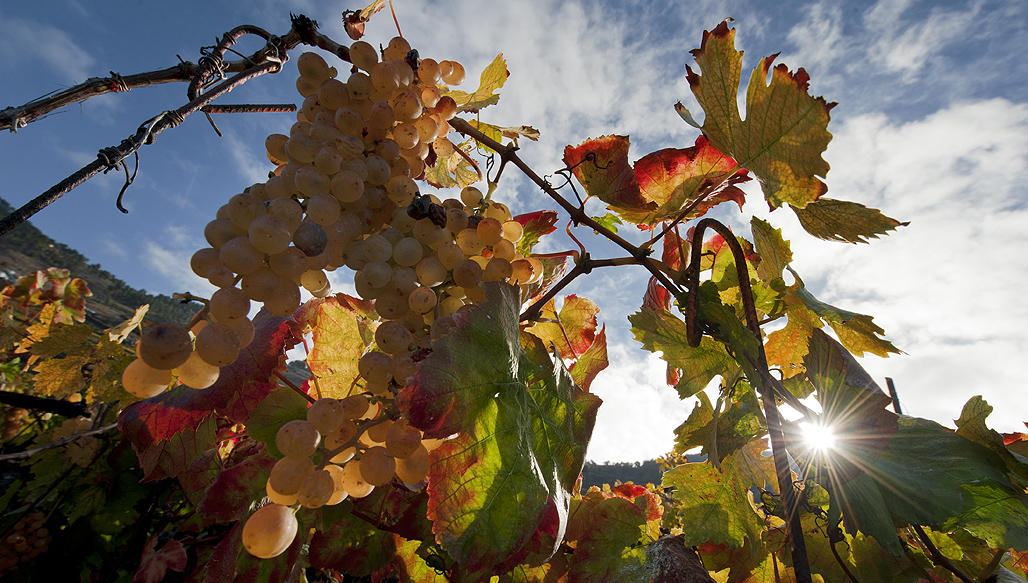
La Palma preserves an incalculable oenological heritage. The settlers who established themselves on the island during the 16th century brought here varieties as ancient as they are rare.Malvasía, sabro, bujariego, gual, almuñeco, verdello, albillo, negramoll, listán prieto and listán blanco are some of these vines, which were lost 300 years after arriving on the island, across almost the entire continent, during the so-called phylloxera crisis (a plague from America that devastated the European vineyard at the end of the 19th century). The establishment of the La Palma Wines Designation of Origin, recognised in 1994, has reinforced the interest in conserving and promoting many of these vines, which were on the verge of disappearing.
Tea wines
Within the La Palma Wines Designation of Origin, in the Northern sub-zone the designation «Vino de Tea» is authorised on the labelling of those white, rosé or red wines that acquire their qualities through ageing in containers made from the heartwood of «Pinus canariensis» (tea). This gives them their own traditional organoleptic characteristics. The oak or chestnut barrel has traditionally been replaced here by another made of this wood.
Experiences to enjoy in D.O. La Palma
Discover this wine-growing region located on the island of La Palma.