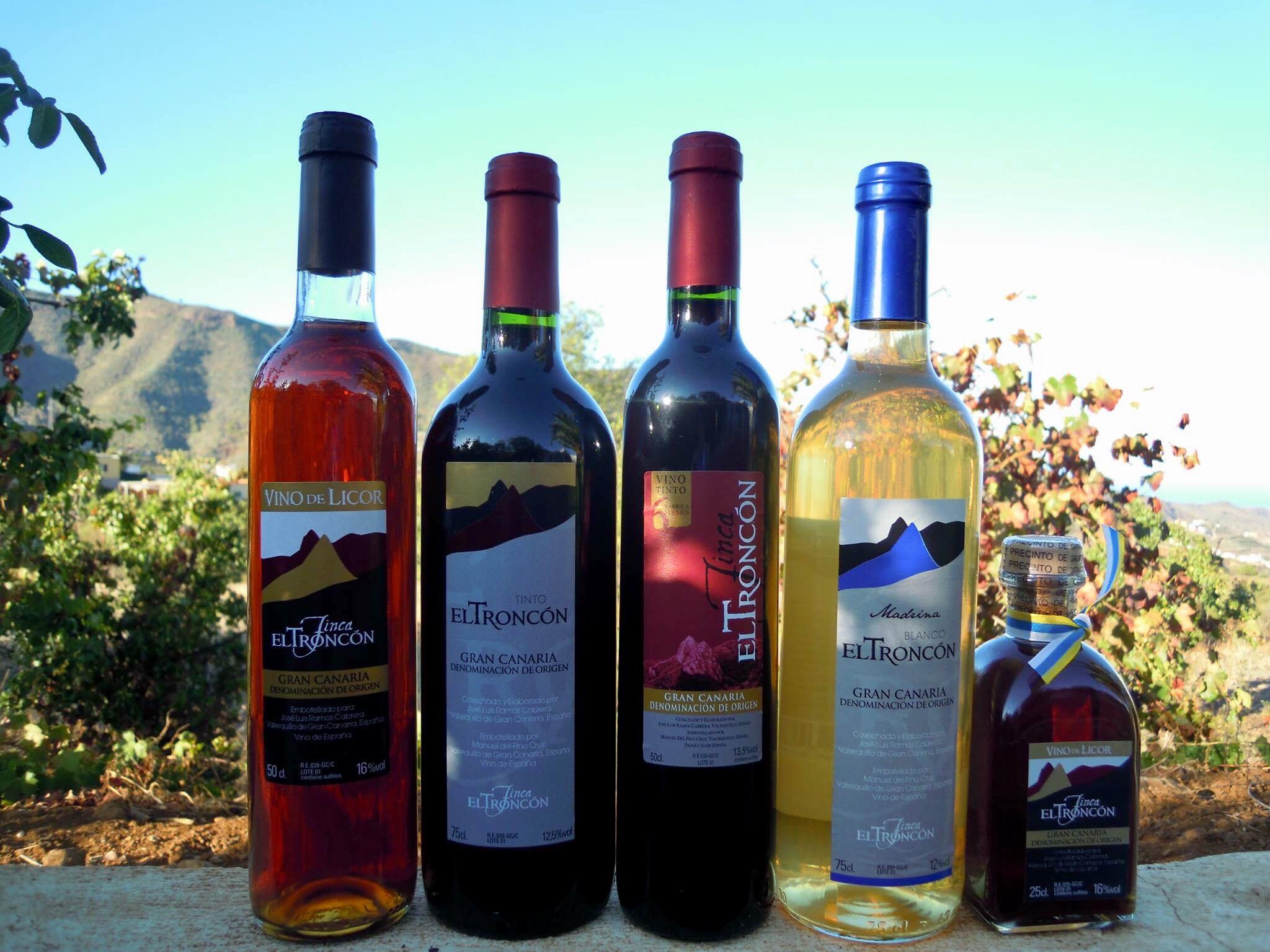
Wine tourism in D.O. Gran Canaria
The island of Gran Canaria has a designation of origin, called Gran Canaria, which includes, though set apart by its peculiar geographical, climatic and historical characteristics, the Monte Lentiscal district. The Gran Canaria Designation of Origin extends across the island, covering the entirety of the island's surface. Its vineyards are spread over small plots, above all in the midlands and summits of the island.
This Designation of Origin was created in the year 2005, following the unification of the two Designations of Origin that had existed on the island until then: Gran Canaria and Monte Lentiscal.
A unique area for unique wines
Viticulture has always been bound to the Island of Gran Canaria; ever since the Castilian conquerors arrived on the island in 1483, vines began to be planted on the island, first in the lower areas and, over time, climbing in altitude. The variety of wines of this designation is very extensive; not for nothing is the island called the miniature continent, for the diversity of microclimates it harbours. This Designation includes, though set apart, the Monte Lentiscal district, located between the Bandama Natural Monument and the Protected Landscape of Tafira, a territory protected by the Canary Islands Natural Spaces Act within the municipalities of Las Palmas de Gran Canaria, Telde and Santa Brígida.
The land and the climate
The production area of the wines protected by the Gran Canaria Designation of Origin extends across the whole Island, currently with a total surface of about 250 hectares, 230 of them registered.
Zones
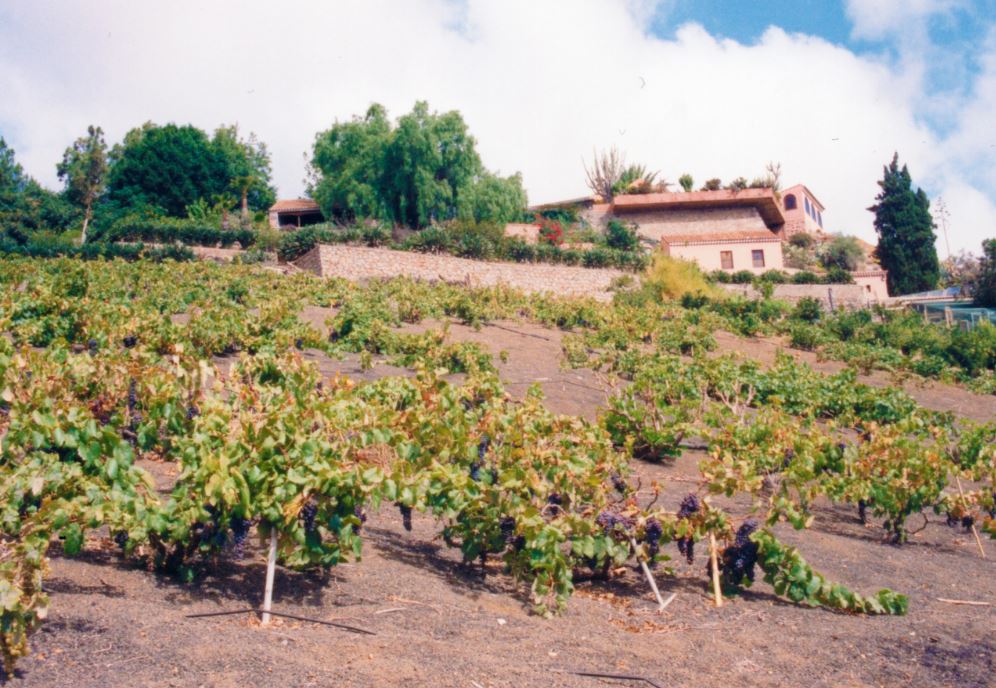
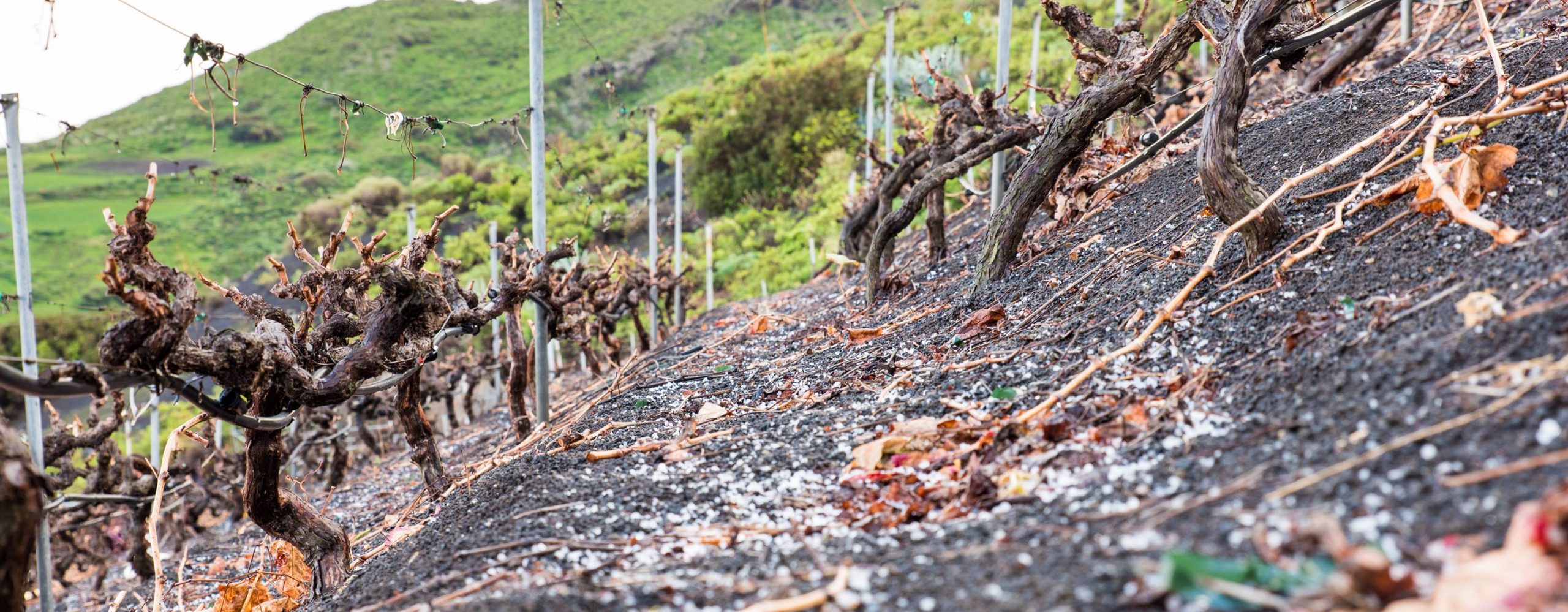
The vineyards sit on very fertile volcanic soils. Owing to their formation in different geological periods, there is a great variety of soils in diverse states of evolution, hence there are porous terrains of volcanic ash and clayey terrains of low permeability and high fertility. The cultivated plots range from 50 to 1,300 metres in altitude.
Microclimates
The island's climatic conditions are favourable for growing the vine; its relief gives rise to different climates and microclimates, so it is impossible to speak of a single climate for the whole island, although owing to its Atlantic position, the height it reaches and its latitude, it enjoys a mild Mediterranean climate, favoured by the trade winds.
The way of cultivation on the island is very diverse and irregular. The most used variety is Negra Común (Listán Negro), predominant throughout the district, followed by Tintilla, Vijariego Negra, Negramoll and Castellana. Among the white varieties, Muscat of Alexandria stands out predominantly, followed by Vijariego, Pedro Jiménez, Listán Blanco, Malvasía, Gual, Albillo, Marmajuelo and Forastera Blanca.
The red wines made on the island are fundamentally for young consumption, of an intense red colour, with excellent primary aromas and great personality. As for the whites, young wines are made that are very aromatic, light and balanced.
Experiences to enjoy in D.O. Gran Canaria
Discover this wine-growing region located on the Island of Gran Canaria.