Wine tourism in D.O. Lanzarote
The D.O. Lanzarote is a unique place for a spectacular wine. The Designation was certified as such in 1994 and since then the Regulatory Council of the D.O. Vinos de Lanzarote has worked on its representation, guarantee, development and promotion. The wines of this designation are characterised by a marked volcanic-mineral flavour that is perfectly balanced, with a fairly high acidity.
A unique area for unique wines
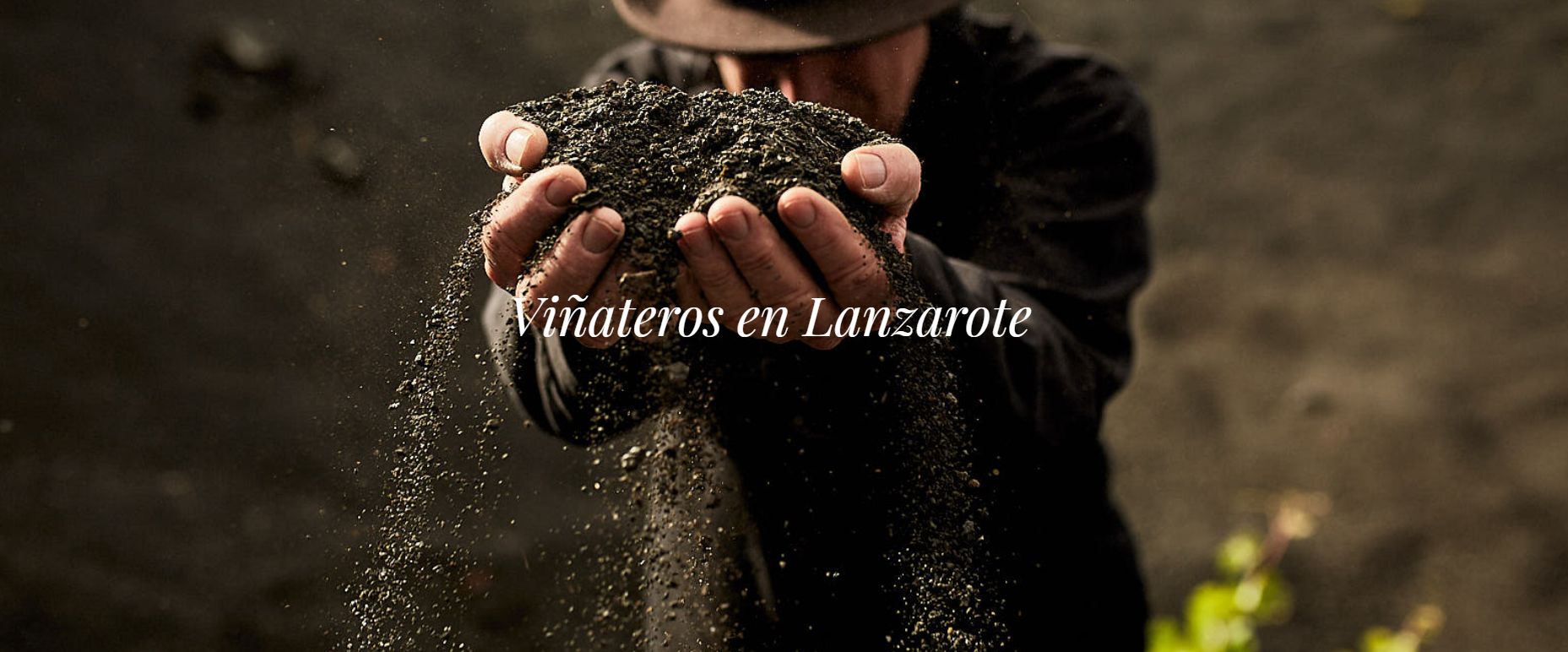
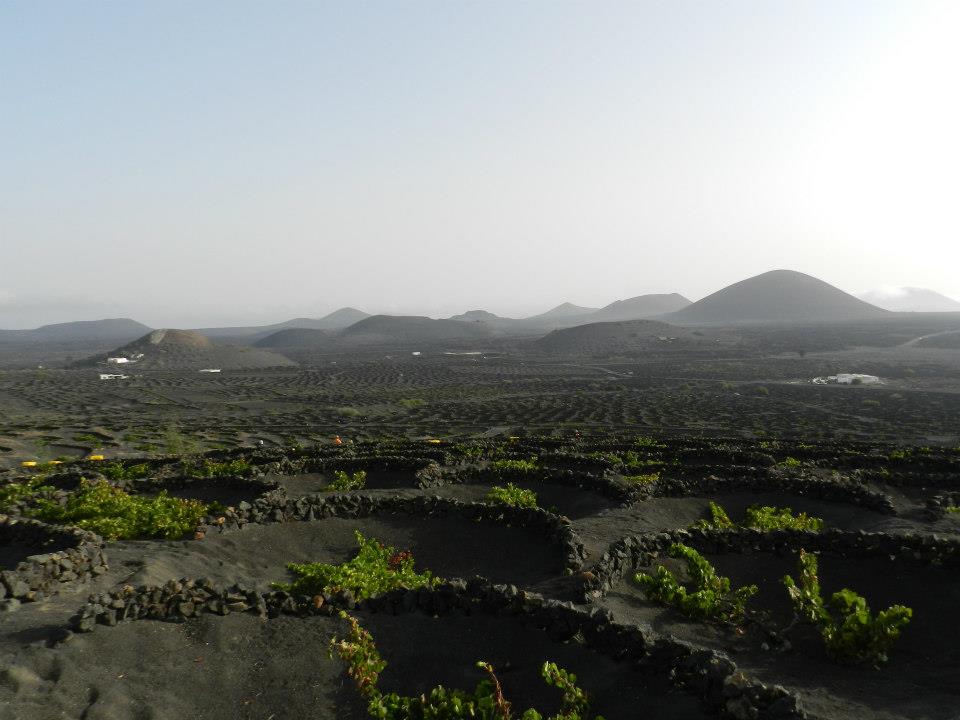
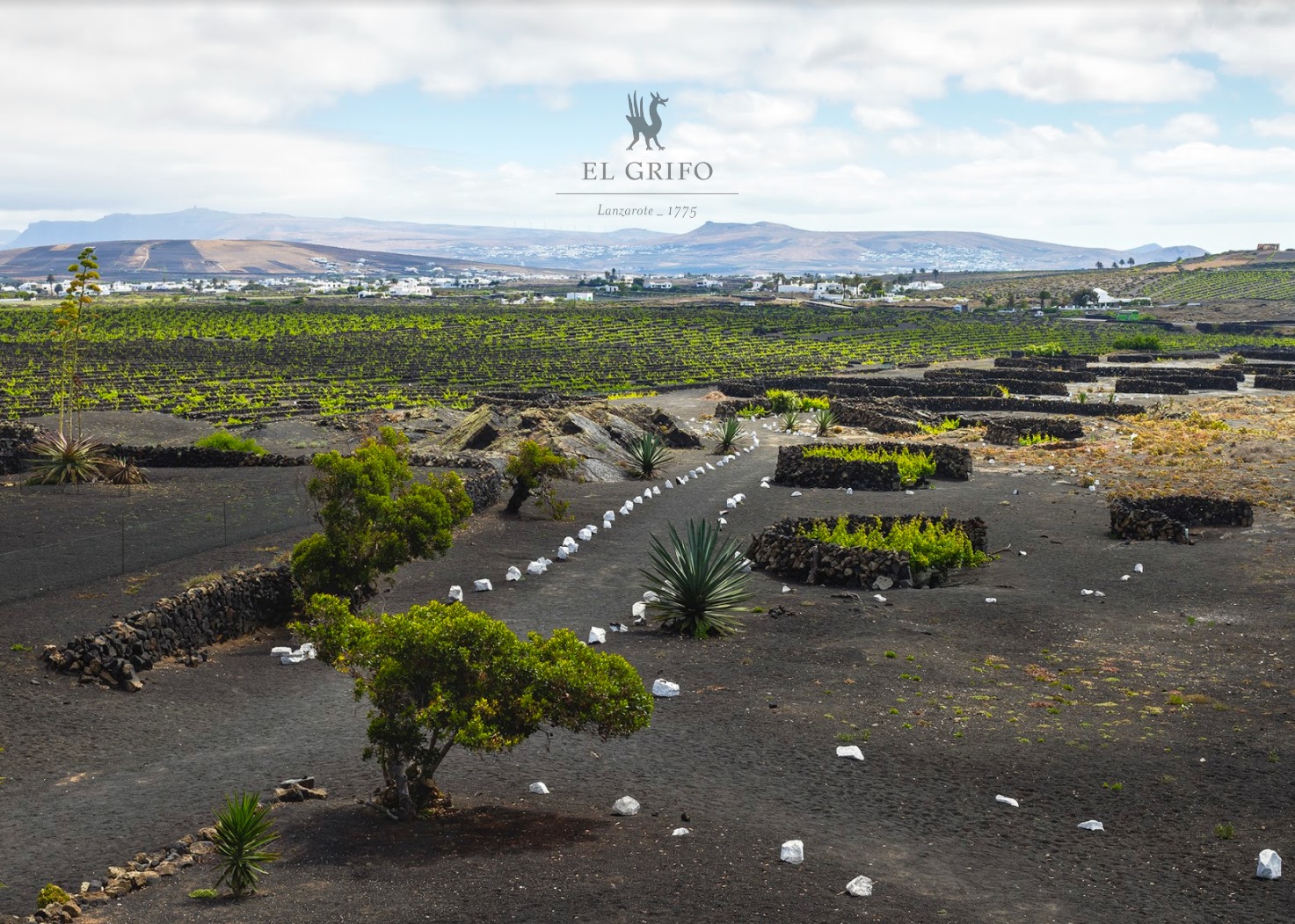
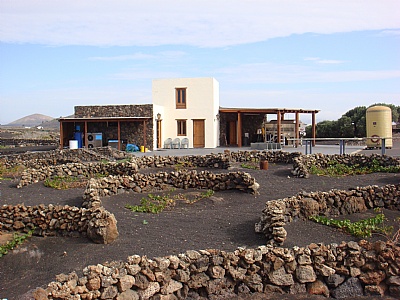
In a subdesert climate such as that of Lanzarote, sharpened by the scorching Saharan winds and on a land of volcanic nature, fostering viticulture as a living being requires sharpness, tenacity and originality. Hence they are the most singular vineyards of the Spanish geography: some buried in funnel-shaped pits so that the roots find fertile soil, and others protected from the winds by semicircular walls of volcanic stone. All of them cushioned by a layer of volcanic ash (picón or lapilli), so that it retains the moisture from the environment.
There is a unique grape variety, the Malvasía Volcánica, of great quality, brightness and perfume that brings together everything needed to make a good wine: good degree, balance, acidity and aroma.
The land and the climate
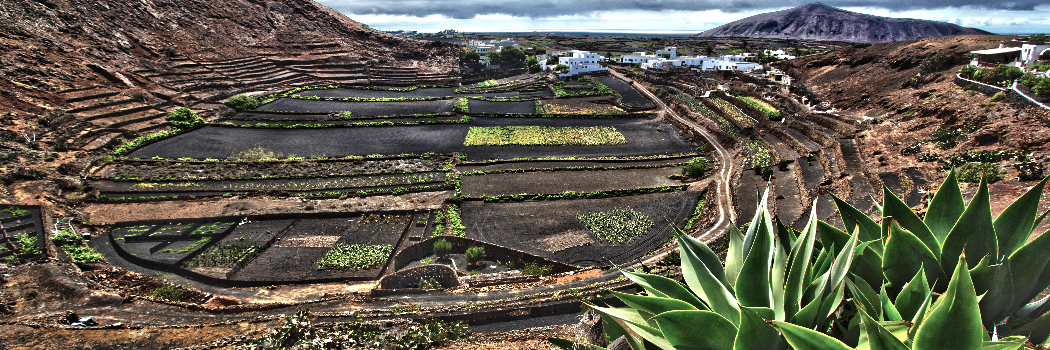
Lanzarote possesses the most singular landscape of the Canary archipelago, shaped by the lava of numerous volcanoes, and with its lunar appearance that reaches spectacular nuances in the Timanfaya National Park.
Zones
The average temperature of the geographical area is 20ºC, with thermal variations between the coldest and the warmest months, the average temperature difference between January and August being around 7ºC.
The average annual rainfall is below 150 mm. As for the seasonal variation, it is worth noting that the rainiest month is December, with most of the annual rainfall occurring between the months of November and March, and being practically nil between the months of June and August.
Microclimates
The most relevant feature in the climatology of Lanzarote is its aridity. This is determined by the low altitude and its homogeneous terrain, qualities that prevent the trade-wind inversion level from being reached, and therefore, there is no interception of the sea of clouds nor the consequent discharge of moisture as occurs in most of the Canary Islands. Other factors that determine to a lesser extent the aridity of some areas of the island are the orientation and the geographical proximity to the African continent.
The wines of the Lanzarote designation of origin are characterised by a marked volcanic-mineral flavour perfectly balanced with the relatively high acidity they present.
There is a great diversity of vine varieties with a predominance of white varieties, and among these the volcanic malvasía is their greatest representative. It is a native variety, predominant in the Lanzarote designation of origin, perfectly adapted to the edaphoclimatic conditions of the island and in which the acidity-volcanic-mineral-flavour binomial comes to determine, by extension, the distinguishing characteristic of these wines.
THE PRACTICE OF VINE CULTIVATION IN LANZAROTE
The practice of vine cultivation takes place in areas where the soil was covered by a layer of lapilli of significant thickness.
These circumstances occurred in areas close to emission cones, especially those that took place between the years 1730 and 1736. The way of developing the cultivation consists of opening a pit some 3 m in diameter by 2-2.5 m deep until reaching the surface of the buried soil, in which the vine is planted with deep root systems. Frequently, the pit is accompanied by a stone structure that acts as a windbreak protecting the plant and, together with the former, they compose a viticultural landscape typical of Lanzarote that reaches its maximum expression in La Geria.
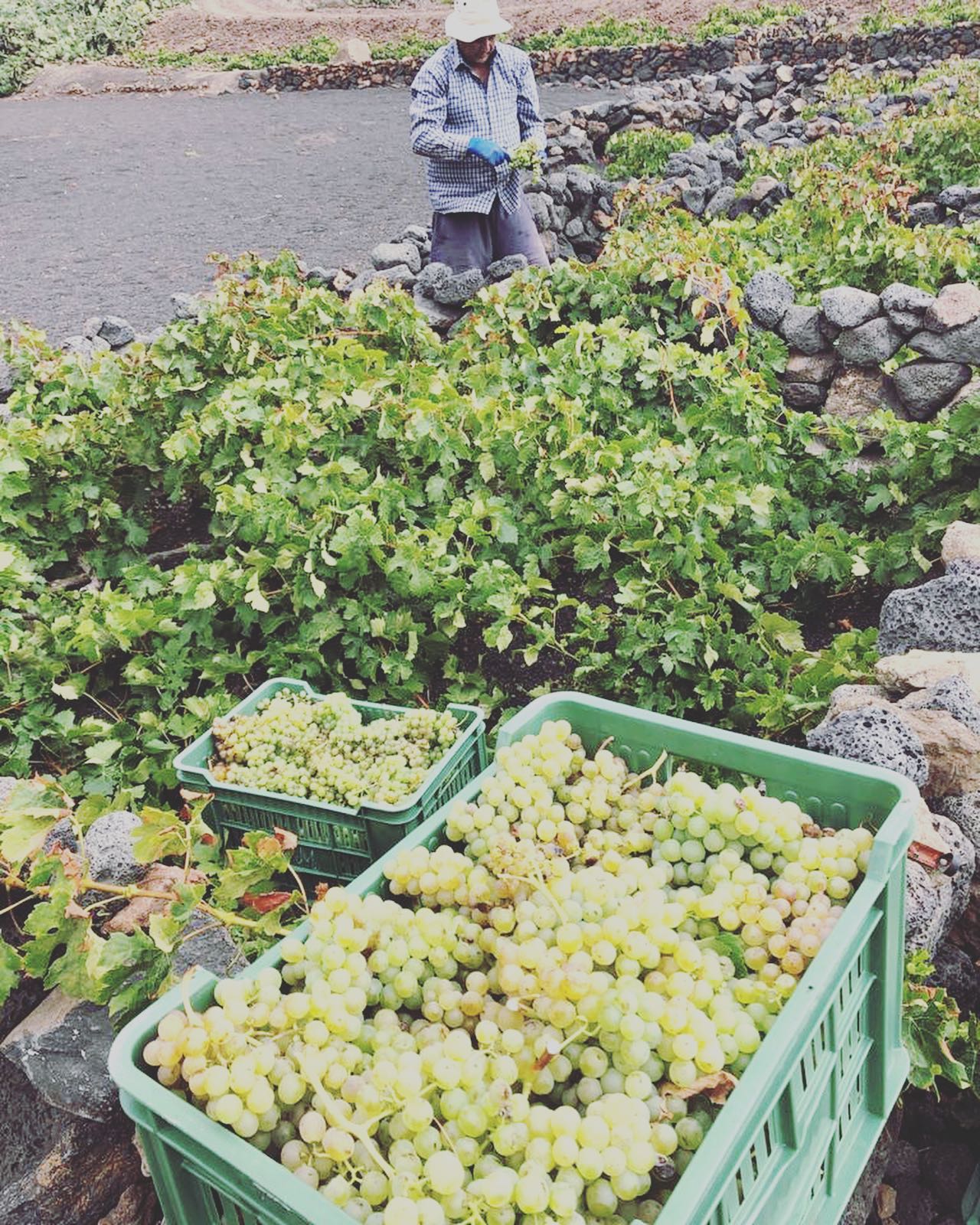
This form of cultivation does not allow the use of machinery, so the work is carried out manually; it also makes it impossible to use high planting densities, with the low yield this entails, obtaining low but quality productions.
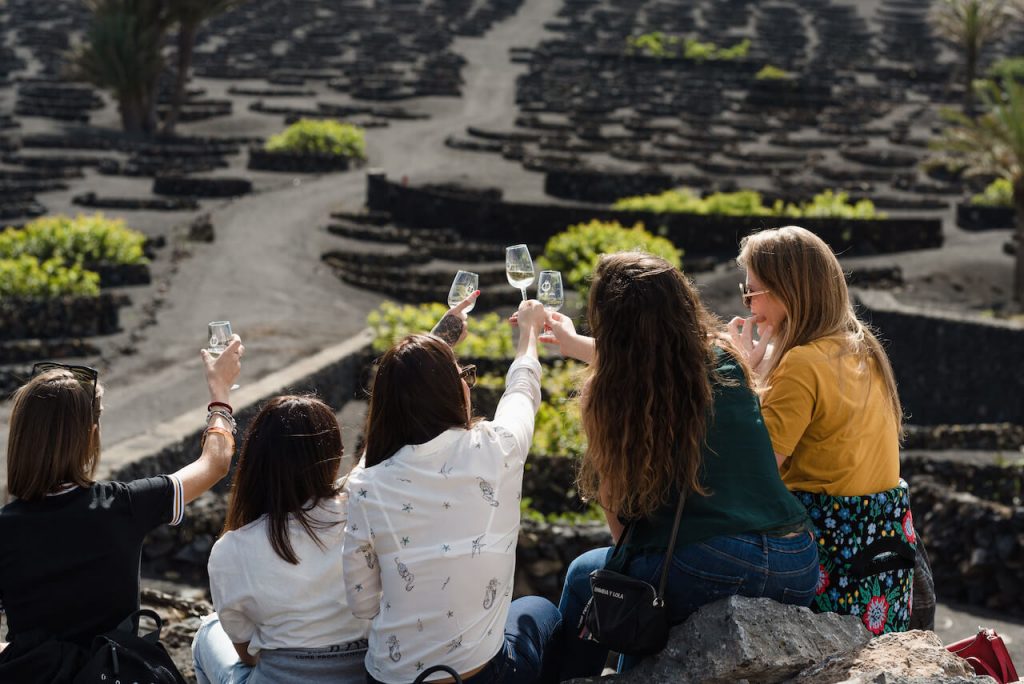
Experiences to enjoy in D.O. Lanzarote
Discover this wine-growing region on the island of Lanzarote.