A unique region for unique wines
The winegrowing culture of the geographical demarcation of this Denomination of Origin is ancestral, finding its roots in the Phoenicians, who introduced the first vine stocks into our territory. Over the centuries, winegrowing activity has steadily increased and consolidated its presence in our province, and has extraordinarily strengthened the marketing of the wines over the last few years.
As for the DO, its origin dates back to 1932, following the approval of the Wine Statute, becoming one of the most representative and historic denominations of the national wine sector.
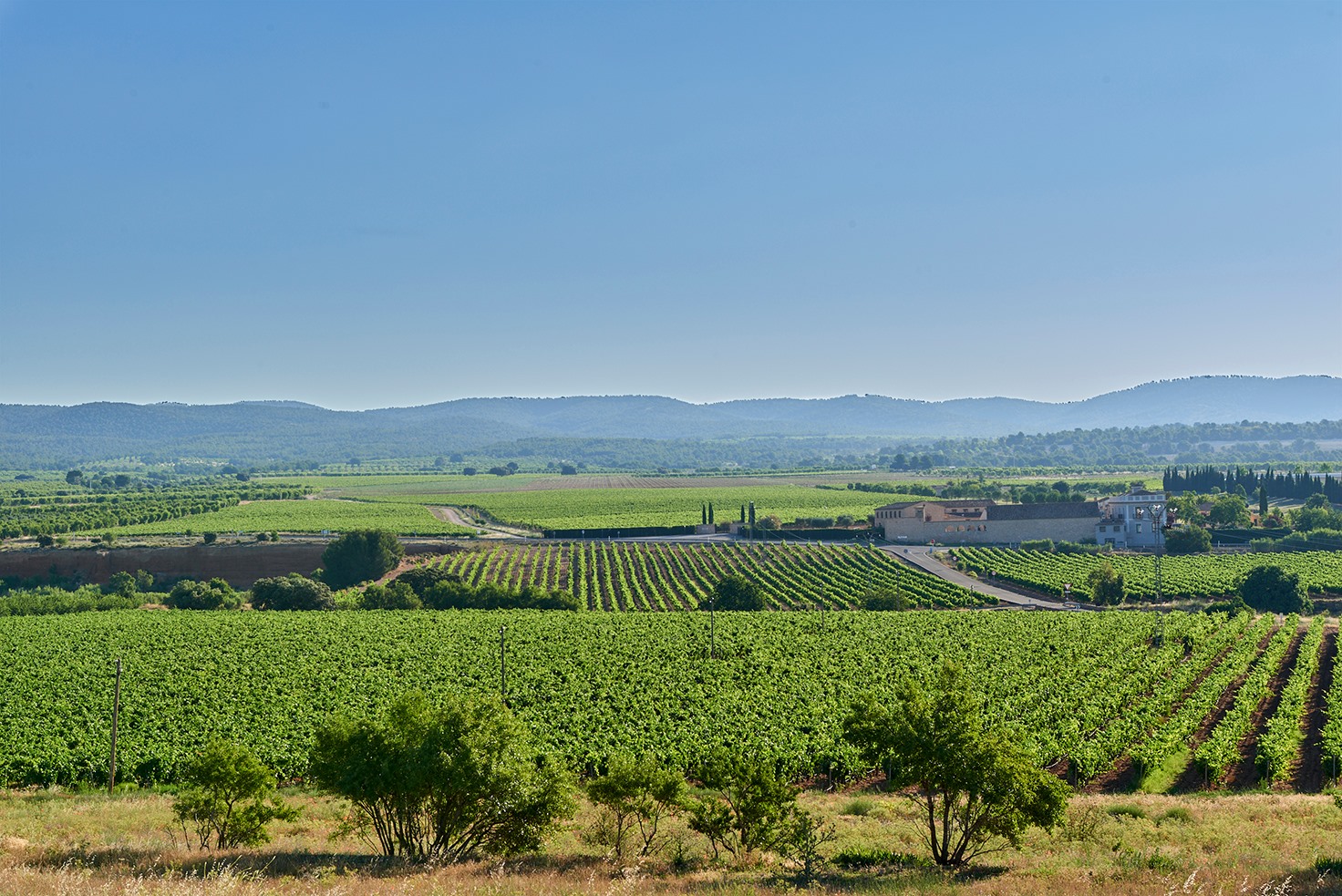
The viticultural potential of the PDO Valencia stands at around 13,000 hectares of vineyard spread across four production sub-zones: Moscatel, Valentino, Clariano and Alto Turia), all of them dotted with charming and picturesque villages imbued with a singular allure.
Areas
In Alto Turia the vineyard is grown between 700 and 1,000 m in altitude, in the Valentino sub-zone between 250 and 800 m, in the Moscatel sub-zone at approximately 300 m and in the Clariano sub-zone the vineyard is grown between 400 and 700 m.
The vineyard is located mainly on Miocene and Quaternary soils, brown, scarce in humus in their upper horizons and with limestone generally present, which favours the quality of the wines. They lack impermeable horizons, so there tend to be no drainage problems.
Microclimates
The climate in the territory of DO Valencia is characterised, in general terms, by a Mediterranean climate with strong storms and downpours in summer and autumn.The thermal regime ranges between 38ºC in summer and – 4ºC in winter, with the average at around 15ºC.Rainfall is about 500 mm on annual average, with maximums in the October – December period.Average insolation is about 2,700 hours/year.
Red varieties: Tempranillo, Monastrell, Bobal, Tintorera, Garnacha Tinta, Cabernet Sauvignon, Merlot, Bonicaire, Syrah, Pinot Noir, Cabernet Franc, Forcallat, Garnacha, Graciano, Malbec, ,Mencía, Mazuelo, Petit Verdot, Moscatel De Hamburgo And Mourvedre;
White varieties: Merseguera, Malvasía, Moscatel De Alejandría, Planta Nova, Macabeo, Tortosí, Planta Fina De Pedralba, Pedro Ximénez, Verdil, Chardonnay, Riesling, Gewürztraminer, Sauvignon Blanc, Semillón Blanc, Moscatel De Grano Menudo, Verdejo and Viognier.
The main varieties are Garnacha Tintorera and Monastrell among the reds, and Moscatel, Merseguera and Macabeo among the whites.
In addition to the white, red and rosé wines made in the PDO Valencia, other types of wine stand out that today enjoy great international projection. These are the semi-sparkling wines, sparkling wines and Petit Valencia (low-alcohol wines).
They are young, fresh, fruity wines, with lower alcohol content and easy to drink, that represent an excellent alternative for a consumer seeking a different oenological offer and willing to discover a new horizon, within the wide range of wines that can be found in the PDO Valencia.
Finally, we highlight the Moscatel Liqueur Wine or Moscatel Mistela. It is a product native to our Community, obtained from grape must of the Moscatel Romano or de Alejandría variety.
The production of the d.o. valencia
The wines protected under the Denomination of Origin Valencia must be made with grapes coming from the respective production areas and from the authorised varieties, and within the framework of an appropriate technique that allows them to attain their peculiar organoleptic characteristics, controlled by the Regulatory Council through its inspection services and tasting committee.
Its average annual production is more than 650,000 hectolitres of wine, made from different grape varieties, some of them native, and it has a total of 93 wineries, of which more than half are bottlers. Its production sector is grouped 85 per cent in cooperatives.